
Donald Trump's focus on rebuilding American industry and stopping illegal immigration are incredibly important. He's been willing to challenge failed policy, and his instinct to put U.S. workers first is crucial to moving this country forward. He's been right when others stayed silent.
But his recent claim that America "doesn't have the talent" for high-tech fields, hence the need to import foreign workers, is uncharacteristically off. America does have the native-born talent, and we don't need a massive influx of tech labor from India and China.
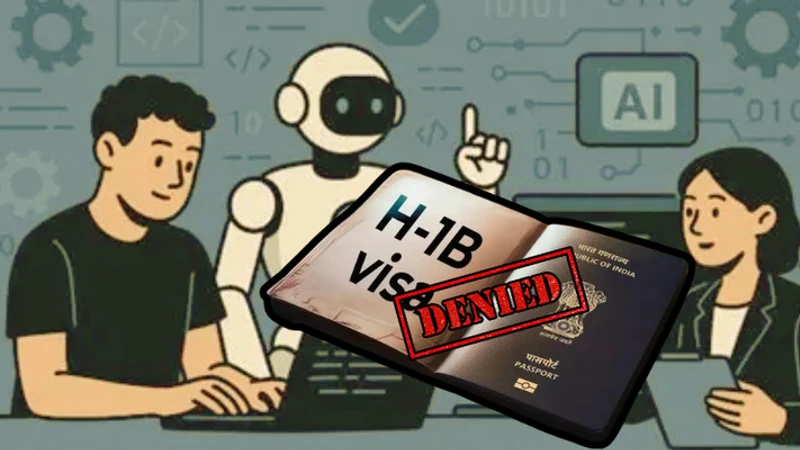
These imported workers are brought in through the H-1B visa program, which allows employers to hire skilled foreign professionals for jobs that require specialized education when they cannot find qualified candidates in America. Over 60 percent of these jobs are in software engineering, with others in research and medicine.
Silicon Valley loves this program. H-1B recipients are bound to their employers, often paid lower wages, cannot change jobs, and are essentially on a soft form of indentured servitude. Companies get low-cost, captured labor, while there are fewer jobs for Americans and less competition in the labor market.
Trump recently, and correctly, raised the fee for a company to sponsor an H-1B to $100,000. But H-1Bs are such a sweetheart deal for tech giants that they continue to apply for them at a pace of 400,000 per year without looking to Americans first. FOX News reports that there are as many as 800,000 H-1B workers here right now, with 60 percent or more working in entry-level software jobs.
Trump is correct that Americans are not earning computer science degrees at a pace like students in Bangalore, but there are plenty of smart, hardworking young people or mid-career professionals who would make excellent hires. For decades, becoming a software engineer meant years of grinding through syntax, memorizing APIs, debugging cryptic error messages, and slowly building up the pattern recognition that separates novices from professionals.
That world is over. Smart, motivated professionals from diverse backgrounds can become proficient, effective entry-level engineers in just weeks or months.
AI-assisted coding, what practitioners call "vibe coding," has collapsed the learning curve in ways that would have seemed impossible just three years ago. Tools like GitHub Copilot, Cursor, Claude, ChatGPT, and Replit AI allow anyone to describe what they want in plain English and receive working, professional-grade code instantly. The barrier between "I understand what needs to happen" and "I can make it happen" has essentially disappeared.
America has always had sharp, analytical minds, and many of them need quality, good-paying jobs due to structural changes in the economy. Veterans who coordinate complex logistics under pressure, factory workers who optimize production systems, teachers who break down complex topics into learnable chunks, or miners who help complex, synchronized operations thrive. These people can absolutely think like engineers. They always could.
What they couldn't do was translate that thinking into the arcane syntax of programming languages. They couldn't spend two years learning Java before becoming productive.
Now they don't have to.
A mid-career professional with zero coding experience can open Cursor or Replit and describe a database structure in plain English to get a working schema. They can use GitHub Copilot to sketch out business logic conversationally and receive clean, tested functions. They can tell Claude or ChatGPT "make this faster" or "add error handling" and watch the code improve in real-time. They can build a working prototype in an afternoon that would have taken weeks before.
The AI handles syntax, best practices, common patterns, and boilerplate. The human provides design expertise, judgment, and strategic thinking — the parts that actually matter. Six months ago, that would have been impossible without a computer science degree.
This isn't experimental technology. GitHub Copilot is used by over a million paid subscribers at companies like Microsoft, Google, and thousands of startups. Cursor has become the editor of choice for AI-first development shops.
Developers use Claude for architecture decisions and complex refactoring. Professional engineers aren't embarrassed to use these tools — they're more productive with them. A senior developer using Copilot can review and mentor three to four times as many junior developers as before, because the AI handles the routine syntax teaching.
What used to require a senior engineer's time: teaching proper error handling, explaining design patterns and catching common mistakes, is now automated. That senior engineer can focus on what requires human judgment: system design, business logic, security considerations, and trade-off decisions.
The traditional path to becoming a developer was a four-year computer science degree, followed by years of junior-level struggle. The new path is four to eight weeks of intensive training in prompt engineering, system thinking, and AI-assisted development, leading to immediately productive contributors. These aren't "fake" developers dependent on AI crutches.
They're professionals using professional tools, just like structural engineers use CAD software and financial analysts use Excel.
The fundamentals still matter, like understanding logic flow, data structures, and system architecture. But they can be learned while building real things with AI assistance, not in isolation before you're allowed to be productive. A bootcamp graduate today using Replit AI can build and deploy a working web application on day one of training.
Compare the economics. The H-1B visa route costs up to $100,000-plus per hire in fees and legal costs, requires months of paperwork and uncertainty, comes with geographic and mobility constraints, and creates dependency on visa renewal. The American vibe-coding training route costs $10,000 to $20,000 for intensive AI-assisted development training. It takes four to eight weeks to job-ready productivity and produces candidates who understand American business culture, legal systems, and customer needs, with no visa uncertainty.
We could train five Americans for the cost of sponsoring one visa. And the tools that make them productive cost less than a Netflix subscription.
There will always be specialized roles like AI researchers, chip designers, or systems architects where we need the world's best, wherever they come from. Foreign talent and H1-Bs have a role to play, but it can't be the first option; isn't that what America First means? It doesn't mean America Only, but it does mean Americans should get the FIRST opportunity.
President Trump built his reputation on seeing what others missed, on understanding when old rules no longer apply, and on recognizing disruption before the establishment does. This is that moment in tech. The old rules about who can code and how long it takes to learn are obsolete. The tools have leapfrogged the barriers. AI hasn't replaced programmers: it's democratized programming.
America has the talent, and the Silicon Valley Elites who say we don't were the same folks who tried to censor and silence President Trump just a few short years ago. They're not America First, and we shouldn't mistake their new friendly posture as anything other than naked self-interest.
So yes, Mr. President, you're right about so much. Your instincts about American potential are spot-on. Apply those instincts here: AI-empowered Americans can outperform the "best and brightest" from overseas. Give Americans the tools, training, and opportunity, and let them cook.


